Showing posts with label Bay of Pigs. Show all posts

Sixth Congress meets as 50th Anniversary of Bay of Pigs invasion marked

Raul Castro,  presenting the central report,  during the opening session of the Sixth Congress of the Cuban Communist Party (PCC)

Raul highlighted the fact that the inauguration of the Congress was taking place coinciding with the 50th anniversary of the proclamation of the socialist nature of the Revolution by its Commander in Chief, Fidel Castro Ruz, on April 16, 1961, during a ceremony to pay tribute to those killed the day before during the bombings of Cuban air bases, which was the prelude to the U.S.-backed Bay of Pigs mercenary invasion.

The Cuban leader noted that the military and people’s parade held earlier on Saturday at the Revolution Square, dedicated to the young generations, was eloquent proof of the fortitude of the Revolution to follow the example of the heroic Cuban revolutionary fighters of Bay of Pigs.

In this regard, he added that next May 1, on the occasion of the International Workers Day, “we will do likewise throughout the country to show the unity of Cubans in defense of their independence and national sovereignty, which as proven by history, can only be conquered through Socialism.”

Raul said that the Congress brings together 1,000 delegates representing nearly 800,000 PCC members affiliated to over 61,000 party cells.

 “But, this Congress really started on November 9 last year, with the release of the Draft Guidelines of the Economic and Social Policy of the Party and the Revolution, a subject that, as previously indicated, will be at the center of the debates of this meeting that is regarded with great expectations by our people,” he stated.
The Cuba president explained that, from December 2010 to February of this year, 8,913,838 people participated in more than 163 thousand meetings held by the different organizations and that over three million people offered their contributions in the discussion of the Guidelines.

 “The data collected from the results of the discussions become a formidable working tool for the government and Party leadership at all levels, like a popular referendum, given the depth, scope and pace of the changes we must introduce,” Raul said.

He added that “in a truly extensive democratic exercise, the people freely stated their views, clarified their doubts, proposed amendments, expressed their dissatisfactions and discrepancies, and suggested that we work toward the solution of other problems not included in the document.”

In this regard, he pointed out that every opinion, without exception, was incorporated to the analysis, which helped to enhance the Draft submitted to the consideration of the delegates to the Congress.

 “The principle that guided this process was that the validity of a proposal would not depend on the number of opinions expressed about it.

This is shown by the fact that several guidelines were either modified or removed based on the opinion of only one person or a small number of them,” the Cuban leader noted.

Raul described the Guidelines as an expression of the people’s will to update the Economic and Social Model in order to secure the continuity and irreversibility of Socialism as well as the economic development of the country and the improvement of the living standard of the people combined with the indispensable formation of ethical and political values.

> Congress  Session Gallery
> Bay of Pigs Anniversary Parade Gallery

The Bay of Pigs - 50 years on

.
Fifty years ago, Cuba defeated a US-backed invading force at the Bay of Pigs. It marked the ‘first defeat of imperialism in America’, and for the Cuban people, the beginning of half a century of heroic defence of their revolution
“the mercenaries came well organized, well armed and well supported. What they lacked was a just cause to defend. That is why they did not fight with the same passion, courage, conviction, valour, firmness, bravery and spirit of victory as did the revolutionary forces”.    
Cuban General José Ramón Fernández (1999)
.
On 15 April 1961 – simultaneous air strikes were launched against three airfields in Cuba with the aim of incapacitating the island and eliminating the possibility of an effective Cuban defence against impending invasion. The early assault killed 7 Cubans and destroyed two planes. The invasion was defeated within 72 hours and 1,180 members of the invading mercenary Brigade 2506 were captured.  In total, over 150 Cubans lost their lives fighting an invading force trained, coordinated and funded by the United States.  The Bay of Pigs – or Playa Girón as Cubans call it – marked a watershed in US-Cuban relations and billboards at Playa Girón remind visitors of ‘The First Defeat of Imperialism in America’. 

Playa Girón can be viewed neither in isolation nor as the original counter-revolutionary act against the Cuban revolution. It is part of an ongoing narrative of American aggression and represents the culmination of a powerful campaign of sabotage and terrorism launched by the CIA in 1959. Bombs were laid, letter boxes blown up, water mains destroyed and sugar and tobacco plantations were set alight.

Cuba militia mobilised during the invasion
Playa Girón was a project inherited by President Kennedy from his predecessor Dwight Eisenhower. Kennedy was hamstrung because his electoral campaign against Nixon was dominated by fierce interventionist rhetoric. In 1960 he evoked memory of the Monroe Doctrine by declaring he would “not let the Soviet Union turn Cuba into its base in the Caribbean”. However, now in office, Kennedy feared that overt US involvement could provoke full-scale war with the USSR.

The CIA’s failure to provoke widespread rebellion through terrorism and sabotage prompted a shift in US strategy from fermenting insurrection to coordinating invasion. This was based on a four point plan inspired by the model of indirect US involvement in Guatemala against Jacobo Árbenz. The programme involved the establishment of a political entity outside Cuba aimed at encouraging the formation of counter-revolutionary groups; the formation of a counter-revolutionary front on the island under CIA influence and the training of paramilitary forces to infiltrate the country and improve underground operations. All this would be underpinned by a pervasive propaganda offensive against the Castro government.

Arming the people 
 The psychological impact of a concerted propaganda onslaught was central to Washington’s strategy for success. Radio stations such as Radio Free Cuba and Radio Swan were established by the CIA and funded by adverts for large corporations like Coca-Cola, Colgate, Pan American and Good Year. In October 1960, Radio Swan ran a feature – corroborated by falsified documentation – declaring that the revolutionary government planned to seize all children and send them to Russia. This fabrication was reinforced by the US-sponsored Operation Peter Pan which, in partnership with the Cuban Church, removed 14,000 children from their families within Cuba. This severely discredited the Church within Cuba and typifies the extant misinformation which contaminates the Western view of Cuba and is exacerbated by the ancestors of Radio Swan – such as Radio and Televisión Martí – which continue to regurgitate lies about Cuba. 

Victory in Cuba required the US-backed mercenaries to hold Playa Girón long enough to declare a provisional government, gain international recognition and appeal for direct military invention from the United States. The primary assault was to be supplemented by small troop incursions in various places throughout Cuba and, if necessary, would be buttressed by the US air force. The dissident government – headed by former Cuban Prime Minister José Miró Cadona – was known as the Revolutionary Council or, as Castro preferred, the Council of Worms, and the tactics employed bear striking resemblance to those used during the failed coup against Hugo Chávez.  As with the coup against Chávez, however, history has resoundingly shown that the imperialist offensive was an unmitigated disaster.

José Ramón Fernández
Popular Western accounts attribute American failure to US mistakes and deficiencies including the failure of diversionary paratroopers to land elsewhere; Kennedy’s decision to reduce exile-piloted air cover and delay the use of US planes; personal clashes between the President, senior advisors and the CIA; and an ignorance of local geography.  All of these appraisals ignore a number of key factors including the actions of Cuban military leaders, the achievements of the revolution and an ability to mobilise popular support. As Cuban General José Ramón Fernández declared in 1999, “the mercenaries came well organized, well armed and well supported. What they lacked was a just cause to defend. That is why they did not fight with the same passion, courage, conviction, valour, firmness, bravery and spirit of victory as did the revolutionary forces”. In this sense, victory can only be understood as a product of the revolution.

Bay of Pigs Museum Playa Girón
Fidel Castro’s military leadership, forged during the guerrilla struggle in the Sierra Maestra, was crucial in ensuring Cuban victory. Castro knew Playa Girón intimately and had been planning against a foreign invasion since the revolution’s triumph. Landing points throughout the island were heavily fortified whilst Castro – wishing to avoid the same fate as Nasser in Egypt – had dispersed and camouflaged his few planes. Any out-of-service aeroplanes were grouped together and displayed as bait to hoodwink attackers. Castro’s hidden air force struck the invading landing squad on the morning of the attack as T33 jets chased away supply ships. The 5th Battalion refused to disembark under Cuban fire as the small but pugnacious air force dealt a fatal blow to the morale of mercenary paratroopers.   

The main reason for Cuban victory, however, can only be explained through the achievements of the revolution. By 1961, great strides had already been made in favour of the people: agrarian reform and land redistribution to 100,000 tenant farmers and sharecroppers; nationalisation of large industrial and commercial corporations and banks; literacy campaigns; reduction in rates for electricity and telephones; urban reform and house construction; the rent-control act; and public beaches – previously off limits to black people – were opened to all.

.


.


Visit our Bay of Pigs 50th Anniversary Page


Special thanks to the Cuba Solidarity Campaign and the author of this article, CSC Campaigns Officer, Dan Smith. The full article can be read here.

Photographs courteous of Raul Corrales, Giron: The Glorious Days of the Bay of Pigs Battle (Aediciones Aurelia, 2007)Via CSC UK

Posada Carrilles Acquitted of All Charges

.
A US court which reserves the right to publish a list labelling nations as "sponsors of terrorism" declared international terrorist Luis Posada Carriles innocent on 11 charges of perjury, fraud and obstruction of justice during a trial before a jury in El Paso, Texas yesterday – a ruling which is unappeasable .

The jury, made up of seven women and five men, arrived at a verdict following a mere three hours of deliberations. The jury had been previously coached by Judge Kathleen Cardone – appointed by George W. Bush – who once again presides over proceedings which culminate with the acquittal of Posada Carriles.

"Every time a jury reviews a case, we cannot predict what it will decide, but we respect the jury's decision," Assistant U.S. Attorney Timothy Reardon affirmed. Reardon, attached to the Department of Justice's Counter-terrorism Section, was curiously deployed from Washington, while the government still refuses to acknowledge that Posada Carriles is a terrorist and to try him on such grounds, as per the international conventions the country has ratified.

Posada is still wanted by Venezuelan authorities on 73 charges of homicide since he re-appeared in Miami in 2005.

Upon acquitting Posada, the jury refused to acknowledge his illegal entry into the United States via the Miami River, aboard the Santrina shrimp boat – despite all of the evidence presented – and opted to believe the "coyote" tale spun by the accused.

It also implicitly refuses to recognize Posada's involvement in the bombings perpetrated in Cuba in 1997, which resulted in the death of young Italian tourist Fabio di Celmo.

A Batista police force collaborator, Posada was recruited by the CIA upon his arrival in the United States and incorporated into Operation 40, aimed at murdering supporters of the revolution during the Bay of Pigs invasion.

The CIA also recruited and trained him to conduct repressive campaigns in Venezuela, where he led the deadly DISIP "cleaning" squad operations, El Salvador, Guatemala and Honduras, where he was entrusted similar tasks.
.
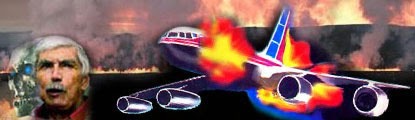
He was detained in Venezuela and charged with masterminding the bombing of a Cuban commercial airliner in 1976, which resulted in the deaths of 73 people. Posada escaped from prison with CIA help and was tasked with heading a drug and weapons trafficking operation, controlled from the Ilopango base in El Salvador.

In November of 2000, Posada was arrested in Panama following an attempt to assassinate Cuban leader Fidel Castro during the Latin American Summit. He was sentenced to eight years in prison for terrorism. He was released in 2004 on a pardon granted by President Mireya Moscoso, then under pressure from the Cuban American terrorist organization and its protectors in Washington and Miami.

El Paso Diary: The Posada Trial from the start or  the last day
Source
By Jean-Guy Allard

May Day Celebrations in Cuba Dedicated to Bay of Pigs Victory

.
.
This year’s celebrations on May Day will be dedicated to the 50th anniversary of the victory against the Bay of Pigs mercenary invasion and to the Fourth Congress of the Cuban Communist Party (PCC).

The call was issued on Saturday by Ermela Santiago, a member of the National Secretariat of the Cuban Workers’ Confederation (CTC), during the 87th annual plenary session of this trade union organization.

Santiago said the occasion will serve to pay tribute to those who participated in that heroic deed on April 19, 1961.

She added that the Cuban workers’ movement is supporting necessary social and economic transformations that are decisive to improve and upgrade the model of the Cuban society.

“Economic efficiency, production of food, profitability, energy saving, the reduction of imports and the fight against indiscipline are some of the areas in which workers will make emphasis during this period,” she noted.

On the date, she added, tribute will also be paid to workers’ leaders such as Lazaro Peña, Jesus Menendez and Jose Maria Perez.

CTC General Secretary Salvador Valdes Mesa announced that, as it has become a tradition, on May Day the Cuban people will march in squares and streets in support of the Cuban Socialist Revolution
.


Visit the Bay of Pigs  50th Anniversary page 


6th “May Day" International Brigade 2011
to mark 50th Anniversary of The Bay of Pigs Victory
Download information

Man says ex-CIA agent Posada gave him explosives for hotel bombing

.
In an exclusive interview Tuesday, a Salvadoran man told The Associated Press that a former CIA operative gave him powerful explosives and cash to carry out a 1997 hotel bombing in Cuba.

Otto Rene Rodriguez said that he was given C-4 explosives and $2,000 by Luis Posada Carriles to enable the bombing at Havana's Melia Cohiba hotel on Aug. 3, 1997. He was later captured in Cuba with 3.3 pounds of C-4 that he said was given to him by Posada.

"Truthfully, looking me in the eyes he cannot say he doesn't know me," Rodriguez told the wire service. "He does know me. He used me like a tool."

Posada, 82, is on trial for lying to US immigration agents about his arrival in the United States in 2005, charges that carry a maximum penalty of 60 years in prison.

"An American prosecutor came here and talked to me, and I promised that if I needed to testify against (the man I knew as) Ignacio Medina, I would," Rodriguez said.

Cuba made Rodriguez available for an interview with The Associate Press to show it was willing to cooperate with the trial.

Interviews with Rodriguez and another confessed hotel bomber, Ernesto Cruz Leon, were conducted Tuesday in the presence of Cuban officials. The Associated Press had no way to verify either of their stories.

With a history of anti-Fidel Castro militancy that dates back to the 1961 CIA-backed Bay of Pigs invasion, Posada worked through the Cold War for intelligence services in Nicaragua, Venezuela, Guatemala, El Salvador, Chile and Argentina.

US documents show he also worked for the CIA from 1965 to June 1976.

More . . .

Also See

> Posada trial, Day 18

Cuba and Venezuela re-launch bilateral Integral Cooperation Agreement

Raúl and Hugo during the event at Havana’s International Conference Center
.
Presidents Raúl Castro Ruz and Hugo Chávez Frías, of Cuba and Venezuela, respectively, re-launched this Monday the bilateral Integral Cooperation Agreement for 2010-2020, following the successful development of that accord during the last decade, which has contributed notably to the socioeconomic advance of both countries.

After confirming that both nations are directing their efforts to economic union under a new kind of relationship, which should continue to grow, Raúl took advantage of the opportunity to convene the Communist Party and all the Cuban people to take part in the planning process for the 6th Congress of Cuban communists, scheduled for the second half of April, 2011, on the occasion of the 50th anniversary of the Bay of Pigs victory and the proclamation of the socialist nature of the Cuban Revolution.

During the event at Havana’s International Conference Center, President Raúl Castro also presented Chávez with a copy of Economic and Social Policy Development Project, which will be discussed at the Congress.
.

In response, the Venezuelan president thanked him for the honor and highlighted the great significance of Fidel, the Cuban Revolution and their resistance to imperialism.

Also present at the event were the Venezuelan delegation and Cuban leaders of the Communist Party, government, representatives of the Revolutionary Armed Forces, the Ministry of the Interior, the Union of Young Communists and the mass organizations.

El arca cubana: a film about terrorism

.

The documentary ‘El arca cubana’ (The Cuban Ark), by Cuban filmmaker Ramon Luis Perez Martinez which takes a look at the history of aggressions and terrorist actions carried out against Cuba by mercenaries and the US government.

There have been more than 3 terrorist attacks carried out against Cuba among them  the Bay of Pigs invasion, Operation Peter Pan, which "stole" more than 14 thousand Cuban children, the sabotage of the Literacy Campaign in 1961, the Cuban Adjustment Act, which has claimed so many lives at sea and that it violates the migration accords, the criminal unleashing of Dengue Hemorrhagic Fever which  killed 101 children, and the 1976, bombing of a civilian airplane, killing all on board.

> Interview with Ramon Luis Perez Martinez

> View Trailer

Also see
“He said, I am totally responsible for all of those acts and others that will come”
a Democracy Now interview with Ricardo Alarcón

US to Ease Travel Rules to Cuba

.
The Obama Administration may ease travel restrictions: a Democracy Now item
.

.
Apparently the criminal blockade will remain in place.